Thursday, 3 October 2019

Africa must ‘value youth’ in the drive towards lasting peace, young envoy tells Security Council

UNMISS/Denis Louro
Local youth join popular South Sudanese artist Emmanuel Kembe as he sings about peace, reconciliation and nation building. The concert was part of a series of peace events that have been conducted in the area by UNMISS, in collaboration with the local authorities. (28 August 2019)
2 October 2019
Recognizing the potential of African youth caught up in conflict to forge peace, is crucial for nurturing their developing identities, and could help them turn away from violence, a youth representative told the Security Council on Wednesday. 
“We have to value youth and their contribution to society, they will look for recognition elsewhere, if we don’t,'' Aya Chebbi, youth envoy for the African Union (AU) who hails from Tunisia, explained during the Council’s meeting on peace and security, in line with a flagship AU project to “silence the guns by 2020.” 
In order for youth to give up their guns “we have to give them direction” and provide “the enabling environment” for them to thrive, she explained.
The meeting, convening under the presidency this month of South Africa, follows a vision established by African leaders to end all wars in Africa by 2063, which involves stamping out gun violence by 2020. 
The Council endorsed the commitment through resolution 2457 in February, outlining steps to achieve continent-wide peace through international support. In December 2015, the 15-member body also mandated a study on harnessing the energy and creativity of youth in resolving conflict, through adoption of resolution 2250.
Youth - persons aged between 15 and 24 – make up 1.2 billion of the world's population,  600 million of whom live in violent regions. Roughly 20 percent of the population of the African continent fall within this age range.
Given these figures, the active engagement of youth is vital in shaping peace and contributing to reconciliation, the Security Council has said.
“We must change the narrative about African youth,” Ms. Chebbi urged, adding that recent waves of youth-led peace movements are indicative of what the young generation desire and can achieve.
In South Sudan youth are replacing bullets with books, she explained, while Kenya is making progress in empowering women to use art as a cultural bulwark against violence, showcasing momentum amongst youth “with little resources” who “did not wait on resolutions to act”. 

2020 deadline, ‘an absolute necessity’ 

Underscoring the core aspect of the meeting’s theme, Special adviser of the Secretary-General on Africa, Bience Philomena Gawanas, said “mobilizing the youth toward silencing the guns by 2020, is not a choice, but an absolute necessity.”  
The number of conflicts on the African continent have compromised peace and security across borders, and too often, perspectives of youth associated with the violence and conflict, she added. 
Correcting the stereotype, she insisted that “it must always be recognized that the large majority of youth in Africa are in reality peaceful, they are agents and partners of peace - the connective tissue - and have a critical contribution to make.” 
Africa will remain at the core of the Council’s work every week this month, with a second thematic debate on peace and security set for 7 October. 
By May of 2020, Secretary-General Antonio Guterres is expected to submit a report on the implementation of resolution 2250, along with 2419, adopted in June of 2018, with the aim of recognizing the role of youth in peace contributions.
“Young Africa deserves a seat at the table and in decision-making positions to make peace possible”, Ms. Chebbi urged. 
“Young Africa cannot continue to be ignored, as the most youthful population in the world. My generation is ready to make an impact that may not be comprehended but cannot be denied”, she maintained. 
 

♦ Receive daily updates directly in your inbox - Subscribe here to a topic.
♦ Download the UN News app for your iOS or Android devices.

News Tracker: Past Stories on This Issue

African cooperation on peace ‘increasingly strong’, Security Council told

African countries are building increasingly strong partnerships for advancing peace and security, as well as inclusive sustainable development across the continent, the Security Council heard on Thursday, during a briefing by the UN Secretary-General’s Chef de Cabinet, Maria Luiza Ribeiro Viotti.
 

WHO chief underscores need to address climate change following visit to Bahamas

PAHO/WHO
Dr. Tedros Adhanom Ghebreyesus (right), Director-General of the World Health Organization (WHO) and Dr. Duane Sands, Minister of Health of the Bahamas, tour the devastated sites in the country to assess health impacts of Hurricane Dorian.
2 October 2019
The top UN health official has called for the world to rally around The Bahamas as the country continues to emerge from the devastation caused by Hurricane Dorian one month ago.
Tedros Adhanom Ghebreyesus, Director-General of the World Health Organization (WHO), made the appeal on Tuesday upon completion of a visit to the island nation.
“It breaks my heart to see the devastation to communities and families who have lost friends and loved ones as well as their homes, possessions and access to crucial services,” he said.
“Hurricane Dorian is another urgent reminder that we must address the drivers of climate change and invest more in resilient communities. The longer we wait, the more people will suffer. We need to keep the world and people safe.”
Hurricane Dorian struck on 1 September, hitting the islands of Abaco and Grand Bahama. Overall, some 75,000 people have been affected, with around 1,500 still living in shelters.
Fifty-six people were killed in the storm and about 600 are still missing.
The WHO chief’s visit included stops in the two affected islands, where most households and other infrastructure were completely destroyed.
The hurricane dealt a substantial blow to the health sector, destroying five clinics across both islands, and interrupting electrical and water supplies.
The Pan-American Health Organization (PAHO), which serves as WHO’s Regional Office for the Americas, is the only UN agency with a physical presence in The Bahamas.
PAHO-WHO have deployed 20 staff there and have coordinated the mobilization of five International Emergency Medical Teams for the response.


♦ Receive daily updates directly in your inbox - Subscribe here to a topic.
♦ Download the UN News app for your iOS or Android devices.

News Tracker: Past Stories on This Issue

Treat climate crisis with ‘greatest urgency’, Bahamas leader tells UN Assembly

Hurricane Dorian, one of the most destructive Atlantic storms ever recorded, “is a generational tragedy” for The Bahamas, Prime Minister Hubert Minnis said on Friday.

In The Bahamas, Guterres sees impact of ‘Category Hell’ hurricane, ‘powered by climate change’ 

The UN chief saw for himself the deadly power of Hurricane Dorian on the shattered islands of Abaco and Grand Bahama on Saturday, describing it as more like a “Category Hell” disaster, than the official Category 5 designation used by meteorologists.
 

'Tenacious' Kyrgyz lawyer and statelessness champion, wins prestigious UNHCR prize

© UNHCR/Chris de Bode
Azizbek Ashurov, Director of Kyrgyzstan-based Ferghana Valley Lawyers Without Borders, has been named 2019 UNHCR Nansen Refugee Award Winner for 2019.
2 October 2019
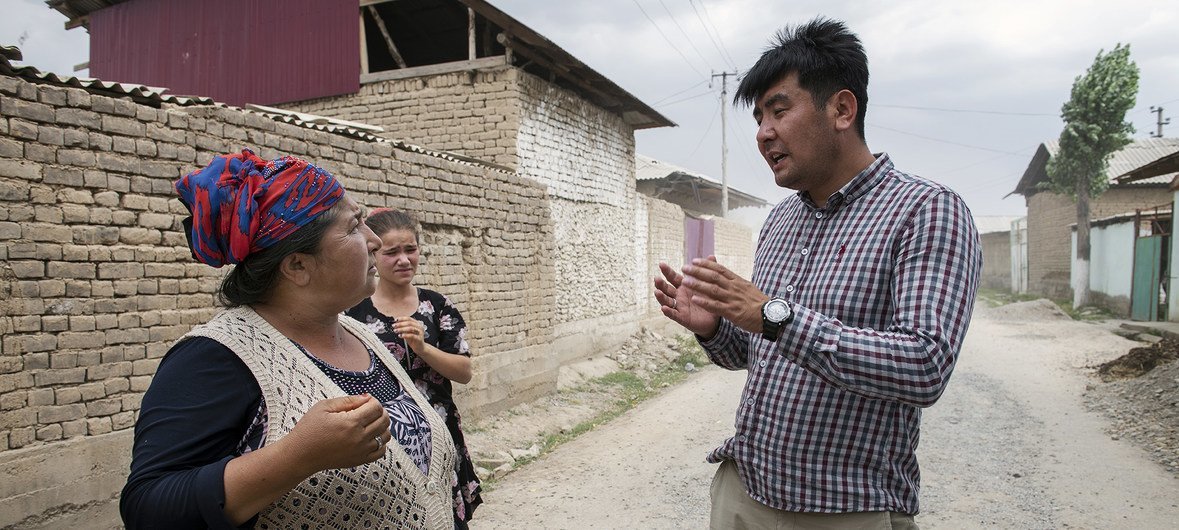
A rights lawyer who took to horseback to help more than 10,000 stateless people gain nationality in Kyrgystan after the break-up of the Soviet Union, has been awarded the UN refugee agency’s prestigious 2019 Nansen Refugee Award.
“Azizbek Ashurov’s story is one of great personal resolve and tenacity,” said Filippo Grandi, UN High Commissioner for Refugees on Tuesday, hailing Mr. Ashurov as an example of the “power of an individual to inspire and mobilize collective action”.
Speaking to journalists in Geneva, the UNHCR laureate described his family’s difficulties in gaining citizenship in Kyrgystan after moving from Uzbekistan following the dissolution of the USSR in 1991.
Despite his legal training, Mr. Ashurov admitted finding the administrative hurdles involved in becoming a Kyrgyz national a significant barrier.
“I realised that if it was this difficult for me - with my education and as a lawyer - then imagine how hard it must be for an ordinary person”, he said.
After helping to set up an association offering free legal advice to displaced and undocumented people in southern Krygystan, Mr. Ashurov supported his Government’s bid to become the first country in the world to end statelessness.
Key measures included the authorities’ decision to cancel all fines for people whose status was irregular, he said.
“Most of the stateless people are illegal, invisible, that’s why they are afraid to show themselves, because they can be deported or fined,” he said. “So, the Government helped us with their amnesty.”

Mobile legal teams ‘travelled on horseback’

Another successful initiative in overcoming statelessness was the association’s creation of mobile legal teams which travelled to remote mountainous areas in search of marginalized groups, on horseback where necessary.
“People who came to our mobile desks, we informed them there were no fines (and) it was a chance for them to legalize their status in the country,” Mr. Ashurov explained, likening stateless people to “ghosts - they exist physically, but they don’t exist on paper”.
Outside Kyrgyzstan, a number of States in the wider region have started anti-statelessness campaigns which have led to more than 34,500 cases successfully resolved to date.
 “Our role in reducing statelessness is to help people do what they cannot do themselves,” Mr. Ashurov explained. “We don’t give them citizenship, we give them back a right that they should have had from birth.”
According to UNHCR, statelessness affects millions of people worldwide.
It deprives them of legal rights or basic services and leaving them politically and economically marginalized, discriminated against and particularly vulnerable to exploitation and abuse.
Since UNHCR launched a 10-year campaign to end statelessness globally in 2014, Mr. Grandi said that 220,000 stateless people had secured a nationality, while around 15 Member States had adopted one of two international treaties banning statelessness.
While this was “clearly not enough” progress, the UNHCR chief noted that he expected more countries to put their names to the global accords at a High-Level intergovernmental meeting in Geneva on Monday.

Who was Nansen?

UNHCR’s Nansen Refugee Award honours extraordinary service to the forcibly displaced.
The award is named after Fridtjof Nansen, the League of Nations’ first High Commissioner for Refugees, from 1920-1930. The League was the forerunner of the UN during the inter-war period.
Born in Norway in 1861 and perhaps best known for his polar exploration, Mr. Nansen’s humanitarian work helped 450,000 refugees return home after the First World War.
Thanks to his efforts, many others became legal residents and found work in the countries where they had found refuge.
When he died in 1930, aged 69, UNHCR established the Nansen Refugee Award in his honour.
Recent winners include South Sudanese surgeon Dr. Evan Atar Adaha, Sister Angélique Namaika from the Democratic Republic of the Congo, and Zannah Mustapha, a lawyer and mediator from Borno state in north-eastern Nigeria.
The award includes a commemorative medal and a $150,000 prize donated by Switzerland and Norway. In close consultation with UNHCR, the laureate uses the monetary prize to fund a project that complements their existing work.

Peace icon Mahatma Gandhi’s message of ‘mutual understanding, equality’ reverberates on Day of Non-Violence

UN
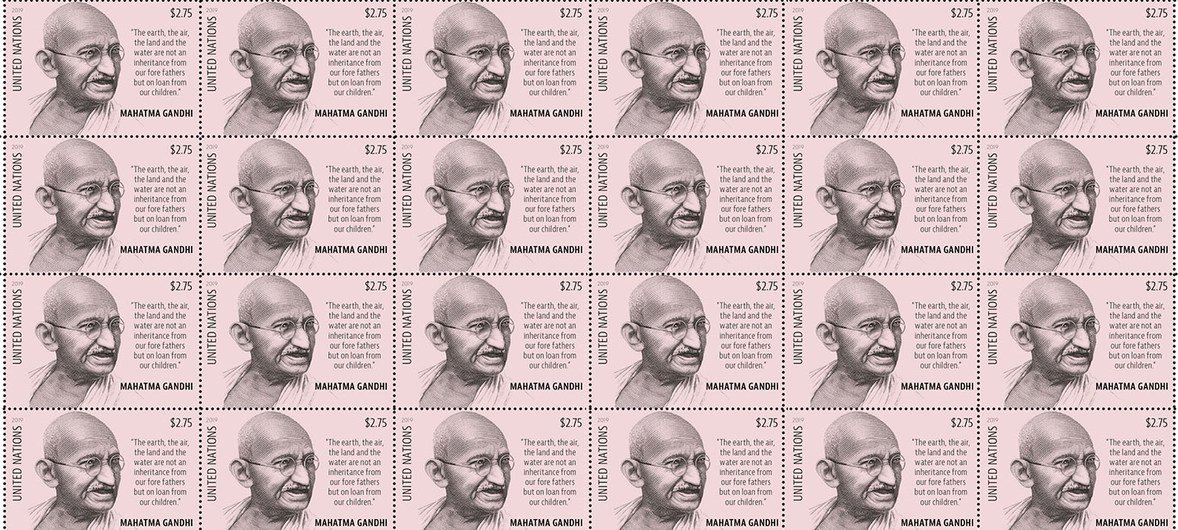
UN Postal Administration-issued stamp of Mahatma Gandhi in Commemoration of International Day of Non-Violence. (2 October 2019)
1 October 2019
On Wednesday, the global community marks the International Day of Non-Violence, which this year coincided with the 150th anniversary of the birth of the global peace icon who led India to independence, Mahatma Gandhi.
“His vision continues to resonate across the world, including through the work of the United Nations for mutual understanding, equality, sustainable development, the empowerment of young people, and the peaceful resolution of disputes”, Secretary-General António Guterres said in his message commemorating the day.
“In today’s turbulent times”, he continued, “violence takes many forms: from the destructive impact of the climate emergency to the devastation caused by armed conflict; from the indignities of poverty to the injustice of human rights violations to the brutalizing effects of hate speech.”
On this International Day, I urge each and every one of us to do everything in our power to bridge this divide as we strive to build a better future for all – UN chief
Moreover, the UN chief pointed out that both on and off-line, “we hear loathsome rhetoric directed at minorities and anyone considered the ‘other’”. To address this growing challenge, the United Nations has launched two urgent initiatives.
The first is a global plan of action against hate speech and the other a plan for the benefit of Member States, to protection and secure religious sites.
“Last week, I issued a global call for a decade of action to deliver the Sustainable Development Goals (SDGs), our roadmap away from violence and towards peace, prosperity and dignity on a healthy planet”, Mr. Guterres said.
He recalled that before his assassination in January 1948, after the bloody partition of India the previous year, Gandhi constantly highlighted “the gap between what we do, and what we are capable of doing”.
“On this International Day, I urge each and every one of us to do everything in our power to bridge this divide as we strive to build a better future for all”, concluded the UN Secretary-General.
Back in 2007, the General Assembly established the day, which is marked annually on 2 October, to "disseminate the message of non-violence, including through education and public awareness” and reaffirm the desire "to secure a culture of peace, tolerance, understanding and non-violence".
The three main categories of non-violent action are protest and persuasion, including marches and vigils; non-cooperation; and non-violent intervention, such as blockades and occupations, according to the United Nation.

150-year pillar of peace 

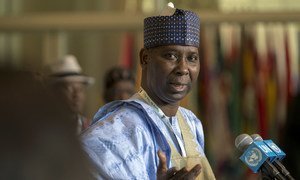
"There's no better hero than anyone who says no to violence ", General Assembly President Tijjani Muhammad-Bande of Nigeria told a commemorative event at UN Headquarters on Wednesday. 
Please click here  to listen to his full address.
And Gandhi’s message not only resounds on the international day, but always, as was illustrated just last week during the launch of a UN-issued commemorative stamp to honour the global leader on the 150th anniversary of his birth.
“Gandhiji’s vision and philosophy are pillars of the work of the United Nations”, said the Secretary-General. “Part of his genius lay in his ability to see the interconnectedness and the unity between all things”.
While his political achievements included using peace, love and integrity to lead the movement ending colonial rule in India, Mr.  Guterres outlined how Gandhi’s vision went “far beyond politics to encompass human rights and sustainable development”.
“Gandhi promoted non-violence not just as a philosophy and a political strategy, but as a means to achieve justice and change”, he said.  “Many of his ideas foreshadow the holistic thinking behind the 2030 Agenda for Sustainable Development”.
The UN chief gave the example of his advocacy and action around the issue of sanitation for clean drinking water and hygienic facilities – when the issue was still “deeply taboo”, and stressed that Gandhi’s ideas drive the work of the UN for “equality, empowerment and global citizenship every day”.
“Gandhi’s enduring legacy is his continued relevance to our thinking and action on a broad sweep of issues, from protecting the environment to promoting justice, from education to inequality.  His teaching remains fresh and thought-provoking, including his emphasis on the importance of facing up to the truth with courage”, Secretary-General Guterres concluded.


♦ Receive daily updates directly in your inbox - Subscribe here to a topic.
♦ Download the UN News app for your iOS or Android devices.
 

Countries urged to make ‘digital world’ safer for children

© UNICEF/UN014974/Estey
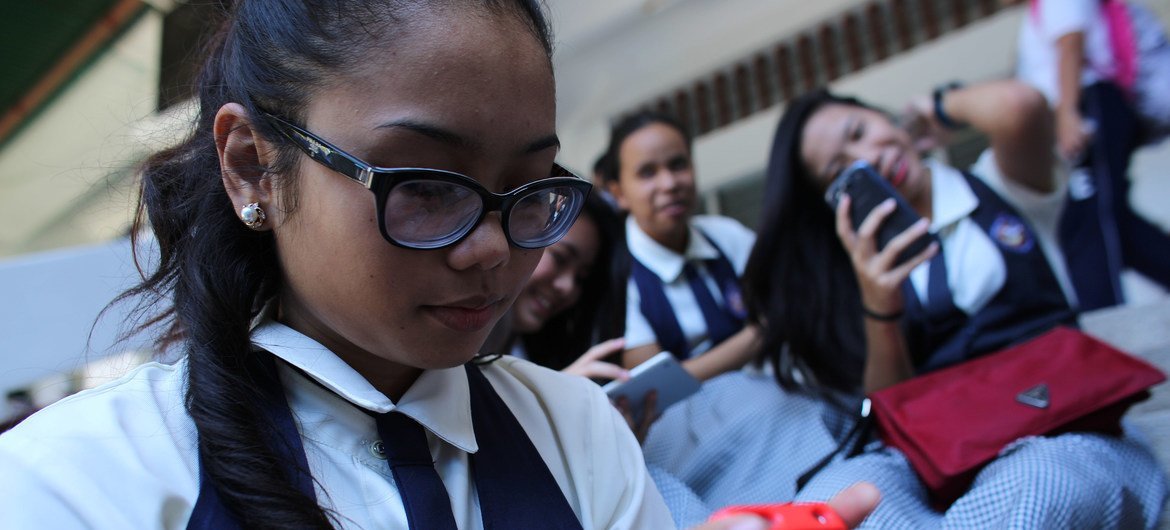
Social media is a huge influence in children’s lives and being constantly connected to the Internet also comes with many risks, including online sexual exploitation, of adolescents and children.
1 October 2019
Rising Internet connectivity has the potential to transform children’s lives for the better, but also makes them vulnerable to sexual abuse, online harassment and bullying, recruitment by extremist groups, and other risks, according to a new UN-backed report published on Tuesday.
The study by the Broadband Commission for Sustainable Development underlines the need for everyone to ensure children remain safe as they explore “the digital world”.
It was produced by the Commission’s working group on Child Online Safety, comprising senior representatives from the UN, non-governmental organizations, law-enforcement agencies, regulators, and private companies.
The report lays out staggering statistics showing the extent and scale of the problem. For instance, in just one year the Internet Watch Foundation (IWF) found more than 105,000 websites hosting child sexual abuse material.
“It takes a village to keep children safe both online and offline. Therefore, all the stakeholders need to prioritize children, collaborate and generate collective actions to prevent and address all forms of violence, abuse and exploitation of children online,” members said in press release.
The report recommends that countries take immediate action, as no Government has developed fully effective protection systems.
Steps that protect children online include establishing a single national authority with ultimate responsibility for child online safety, as well as ensuring robust legislation is in place, among other measures.
The report also highlights the differences in Internet access depending on where young people live. Globally, there are more than two million people under the age of 18. Around 71 per cent of youth are already online, according to UNICEF research, cited in the report.
However, millions are still waiting to log on. Currently, 60 per cent of young Africans are not online but the number of users on the continent is growing by 20 per cent a year.
“In Sub-Saharan Africa, Asia and Latin America, connectivity has not yet reached all children. With the expansion of affordable broadband to these parts of the developing world, there is an urgent need to put in place measures to minimize the risks and threats to these children, while also allowing them to capitalize on all the benefits the digital world can bring to our societies,” the report said.


♦ Receive daily updates directly in your inbox - Subscribe here to a topic.
♦ Download the UN News app for your iOS or Android devices.
 

Tuesday’s Daily Brief: Greek island shelter crisis, only 8 per cent of UNGA speakers women, Russian alcohol laws extending lives, Older Persons Day

© Eric Ganz
An elderly women sells colorful paper lanterns with candles to float down the Thu Bon River in Hoi An, Vietnam.
1 October 2019
Tuesday’s top stories: Greece urged to fast-track asylum-seekers as 1,000 die on the Mediterranean; just 16 women addressed UN General Assembly; less alcohol means longer lives in Russia; cholera campaign in Sudan; standing up for older people on international day.

Athens urged to fast-track asylum-seekers amid crisis over island shelters

A spike in the number of refugees reaching Greek island reception centres is likely to worsen the situation in already “dangerously overcrowded” facilities there, the UN refugee agency said on Tuesday.
In a call for asylum seekers to be moved urgently to the mainland by the central Government in Athens, UNHCR reported that sea arrivals in September rose to more than 10,000 - the highest monthly level since 2016.
And, for the sixth year in a row, 1,000 people are believed to have drowned in Mediterranean Sea crossings.
Full story here.

74th General Debate saw only 16 women deliver national statements

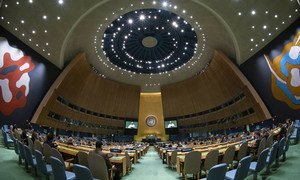
Having concluded the High-level segment of the General Assembly, where heads of State or senior officials from 192 of the UN’s 193 Member States discussed the world’s pressing issues, President Tijjani Muhammad-Bande held his first press briefing on Tuesday.
Drawing attention to the fact that “only eight per cent of speakers on behalf of Member States were women”, he lamented that that was “not a good figure, especially in relation to our commitment to gender equality”.
Mr. Muhammad-Bande maintained that the only solution to this is to keep urging Governments to allow for the broadest participation, “especially to unlock obstacles to the participation of women in politics”.
Turning to other Sustainable Development Goals (SDGs), he told reporters that we need to “push hard” to ensure some $2.5 trillion per year – the financing required over the next decade for implementation.
He also outlined the five major summits on global challenges, such as climate action and health care, which were convened on the sidelines of the General Debate.
When asked for his presidential priorities, the Assembly president had no hesitation in citing peace and security, poverty eradication, quality education, climate action and inclusion.

‘We need to stand up now’ for the elderly: urges UN rights expert on World Day

In the coming decade, the number of persons aged 60 or over is projected to grow by 46 per cent, making the increase in those officially classified as elderly, one of the “most significant transformations of this century,'' the United Nations declared on Tuesday, marking the International Day of Older Persons. 
By 2030, 1.4 billion elderly people globally will outnumber youth - a big rise from 2017, when that figure stood at 962 million.
Read the full story here.

WHO and UNICEF in campaign to protect 1.6 million in Sudan from cholera

UN agencies are working with the authorities in Sudan to protect more than one million people from cholera, an infectious disease which can kill within hours if left untreated.
So far, there have been 215 confirmed cases, including eight deaths, since an outbreak was declared in Blue Nile state on 8 September.
The World Health Organization (WHO) and the UN children’s fund, UNICEF, will support an oral cholera vaccination campaign aimed at covering 1.6 million people there and in neighbouring Sinnar state.
Find our story here.

Strict alcohol laws which cut intake more than 40 per cent in Russia, linked to historically high life expectancy

Strict laws put in place by the Russian authorities since 2003 have resulted in a significant drop in alcohol-related deaths nationwide, a report from the World Health Organization (WHO) revealed on Tuesday.
The impact study on the effects of "alcohol control measures on mortality and life expectancy", shows that the amount of alcohol consumed per person fell sharply by 43 per cent, between 2003 and 2016.
Here’s our full coverage.

Listen to or download our audio News in Brief for 30 September on Soundcloud:


♦ Receive daily updates directly in your inbox - Subscribe here to a topic.
♦ Download the UN News app for your iOS or Android devices.

News Tracker: Past Stories on This Issue

UN General Assembly President upholds value of multilateralism in speech closing annual debate

The only way to guarantee peace, security and sustainable development is for countries to work together, the UN General Assembly president said in his speech on Monday concluding the annual high-level debate in the Hall.

‘We need solutions’, not cynicism; UN Assembly President urges world leaders to do more to tackle global ills

The fact that world leaders have convened at United Nations Headquarters in New York is “a veritable testament to the primacy of this great multilateral body”, the General Assembly President said on Tuesday, opening the Organization’s annual General Debate.
 

Athens urged to fast track asylum seekers amid island shelters crisis – UNHCR

© UNHCR/Gordon Welters
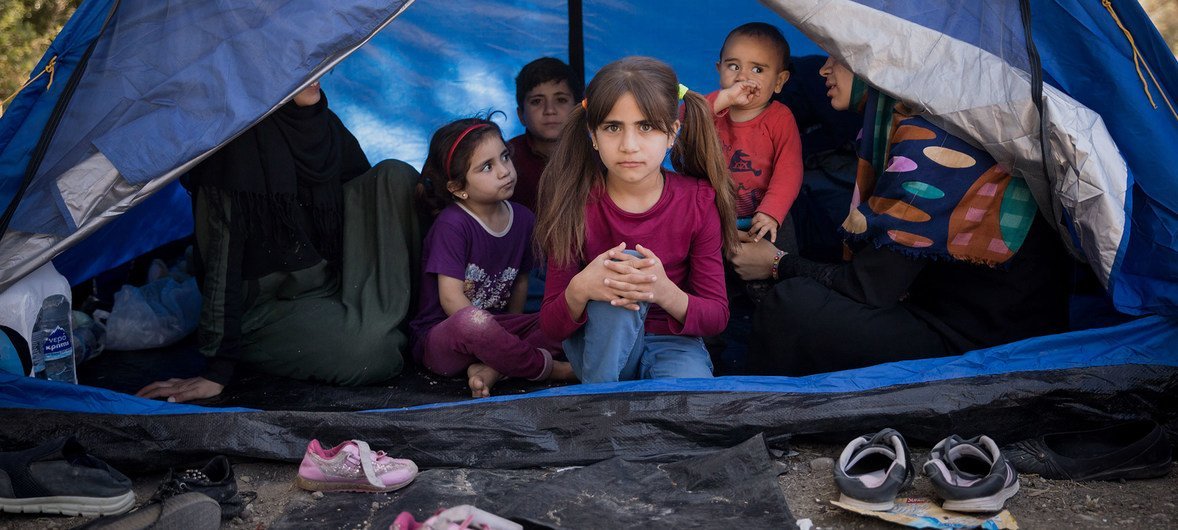
A Syrian family from Idlib who have recently arrived in Lesvos, Greece, take shelter in an olive grove adjacent to Moria reception centre. (23 September 2019)
1 October 2019
A spike in the number of refugees reaching Greek island reception centres is likely to worsen the situation in already “dangerously overcrowded” facilities there, the UN refugee agency said on Tuesday.

In a call for asylum seekers to be moved urgently to the mainland by the central Government in Athens, UNHCR reported that sea arrivals in September rose to more than 10,000 - the highest monthly level since 2016.
The development follows a fire on Sunday in a housing container at Moria reception centre in Lesvos in which a woman died, reportedly sparking a violent protest.
“This spike has added to, has worsened what were already extremely difficult conditions on the Greek islands in the reception centres, which is why we are underscoring it is so important that urgent measures are taken now to get people who can be transferred off the islands to the mainland,” UNHCR spokesperson Liz Throssell told journalists in Geneva.
According to the UN agency, there are more than 4,400 unaccompanied children on the islands, out of at least 30,000 people seeking shelter in total.
Of that number, 500 youngsters have also been housed with unrelated adults in a large warehouse-style tent, UNHCR says, describing the situation on Lesvos, Samos and Kos as “critical”.
Highlighting the need for “urgent steps” from the Greek authorities, Ms. Throssell appealed to them to “fast-track” the transfer of more than 5,000 asylum-seekers who already have permission to continue their asylum procedure on the mainland.
On Lesvos, the official reception centre in Moria is at five times capacity, with 12,600 people, the agency said, while at a nearby informal settlement, more than 100 people share a single toilet.
On Samos, the Vathy facility houses 5,500 people – eight times over capacity – and on Kos, some 3,000 people live in a space meant for just 700.
Most of those seeking shelter are from Afghanistan and Syria, along with Iraq and the Democratic Republic of the Congo, UNHCR said.
Previous comments by the Greek Government about wanting to alleviate pressure on the islands and protect unaccompanied children were welcome, the agency said in a statement.
According to UNHCR, Greece has received 45,600 of the 77,400 people crossing the Mediterranean Sea this year - more than Spain, Italy, Malta and Cyprus combined.

Mediterranean Sea crossing deaths top 1,000 for sixth year in a row

Meanwhile, for the sixth year in a row, 1,000 people are believed to have drowned in Mediterranean Sea crossings, the UN migration agency, IOM, said on Tuesday.
Citing a recent spate of shipwrecks along the main migratory routes to Europe which have contributed to the toll, the agency highlighted an incident off the Moroccan coast at the weekend in which as many as 40 migrants are feared drowned.
Over the past six years, at least 15,000 men, women and children have lost their lives trying to reach Europe by boat – a situation that the UN agency likened to “carnage at sea”.
According to IOM data, the deadliest sea crossing is the central Mediterranean route from North Africa to Italy, with 659 migrant or refugee lives lost so far this year.
Nearly 270 others perished trying to reach Spain from North Africa, while 66 victims were recorded in the waters between Turkey, Syria and Greece.


♦ Receive daily updates directly in your inbox - Subscribe here to a topic.
♦ Download the UN News app for your iOS or Android devices.

News Tracker: Past Stories on This Issue

Children’s lives in Mediterranean Sea must take priority over politics, says UNICEF

The fate of 130 children on board two rescue ships in the Mediterranean Sea should not be put at risk by political point-scoring, the UN said on Thursday, amid ongoing uncertainty about whether the vessels will be allowed to dock in Italy.

‘€1 million’ fines for rescue boats prompts UN concern for future sea operations

A move by Italian lawmakers to impose fines of up to €1 million on vessels and organizations carrying out search and rescue operations off the country’s coastline, sparked a new warning on Tuesday from the UN that the measure risks deterring future lifesaving efforts in the Mediterranean.