Friday, 17 January 2020

THE TRAUMATIZED UNDER THREAT IN SUDAN


Sudan: Lives of traumatized, displaced women in West Darfur under threat

UNFPA
UNFPA has been supporting pregnant women in West Darfur following an increase in instability in the region.
    
15 January 2020
Ongoing instability in Sudan’s West Darfur region has left the lives, health and safety of thousands of women hanging in the balance, according to the  United Nations Population Fund, UNFPA. 
Since 28 December, intercommunal disputes in camps for internally displaced persons (IDPs) have left more than 40,000 civilians displaced, of whom an estimated 10,800, are women of reproductive age.
More than 50 were killed and 60 others injured, the UN has reported, and thousands of civilians in recent weeks crossed the border into Chad, seeking refuge.
Citing two flash reports this year, the UN agency shone a light on a serious lack of adequate reproductive health services and protection.
“Following the recent attack on the camps in West Darfur, women had to flee leaving behind their burnt houses and all of their personal belongings”, explained Massimo Diana, UNFPARepresentative in Sudan. “The attack has left them traumatized and in need of psychological support”.
Moreover, as they have no private shelter, the women “continue to feel unsafe and are very vulnerable towards violence and harassment”, he added.

Immediate action needed 

Based on data from the Ministry of Health and Social Development, there are an estimated 3,442 pregnant women in dire need of adequate reproductive health services – some 700 women of whom are in their ninth month of pregnancy, living in 41 different IDP sites.
Some 373 deliveries took place in the past 10 days alone. UNFPA stressed that immediate action is needed to save lives and ensure women’s health and safety. 
“The unavailability of obstetric services for pregnant women and the lack of access to safe delivery is the reason for loss of lives both for mothers and newborns,” maintained Mr. Diana. “Overcrowding at hospitals during instability is common and in the case of current events in West Darfur means that women are delivering babies in shared rooms or open squares.”
While an estimated 160 midwives have been deployed, the availability of safe delivery facilities remains inadequate, leaving women to give birth in makeshift spaces, including classrooms in the presence of other women and children. 

UN steps up assistance

UNFPA is supporting the State Ministry of Health and other partners in establishing sexual and reproductive health clinics in 31 IDP sites, which will include the services of 60 midwives. 
The UN agency has also shipped 31 different emergency reproductive health kits from Khartoum to El Geneina, the capital of West Darfur, to cover the needs of pregnant women.
Having no access to emergency obstetric care leads to an increase in maternal and neonatal deaths -- UNFPA
“Having no access to emergency obstetric care leads to an increase in maternal and neonatal deaths so this is a life-saving intervention,” pointed out Mr. Diana.
Credible information, including from rapid assessments, also indicates that amidst rising displacement, gender-based violence (GBV) is being perpetrated on a large scale and in different forms, especially for women and girls.
The Population Fund noted that a team of GBV and reproductive health coordinators were deployed to El Geneina and emergency reproductive health kits were dispatched to support the humanitarian response.
Moreover, prevention and response efforts are being strengthened, including by coordinating and providing psychosocial support and other services. 
“Gender-based violence…is one of the most pervasive human-rights abuses in the world,” the UNFPA Representative spelled out. “Both priorities must always be treated with immediate attention – regardless of whether it is an emergency or not.”


♦ Receive daily updates directly in your inbox - Subscribe here to a topic.
♦ Download the UN News app for your iOS or Android devices.

UN WILING TO SUPPORT VOLCANOVICTIMS IN PHILIPPINES

Philippines volcano: UN stands ready with support, as thousands told to flee

Philippine Red Cross
Students volunteer at a Red Cross logistics centre to pack relief goods for victims of the Taal volcano in the Philippines.
    
15 January 2020
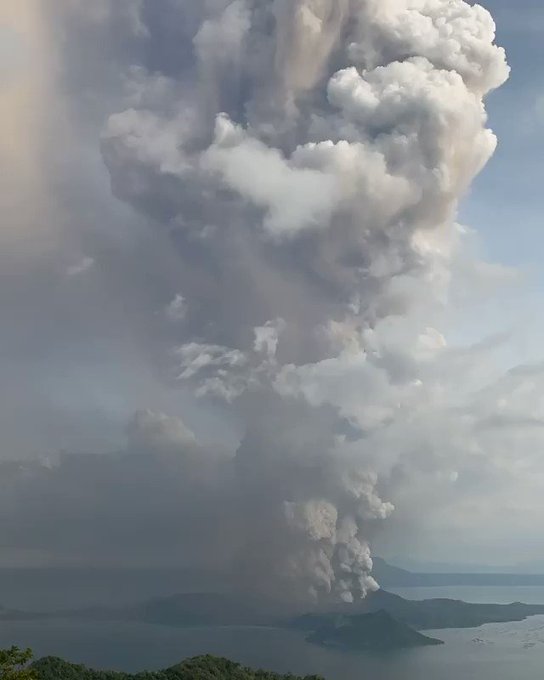
The UN is concerned over warnings issued by Philippines’ authorities that volcanic eruptions on the country’s most populous island could last “days, months or even years”. 
In explosive eruptions last Sunday, the Taal Volcano, located on the island of Luzon, some 70 kilometres south of the capital city of Manila, began to violently spew magma, which has led to the evacuation of more than 38,000 people to 198 evacuation centres so far, the UN Office for the Coordination of Humanitarian Affairs (OCHA) tweeted on Wednesday. 
Within hours, the volcano shot a mile-high plume of ash and triggered multiple earthquakes.  
Taal has had at least 35 reported eruptions since records began, most recently in 1977. 
Briefing reporters in New York, UN Spokesperson Stéphane Dujarric said that OCHA and International Organization for Migration (IOM) teams were on the ground near the volcano.  
Meanwhile, knee-deep gray ash covers homes, animal cadavers and alarming cracks on the island’s surface, as UN teams visit evacuation centres and support local authorities. 

Alarm continues 

The country of 105 million sits on the Pacific Ocean’s “ring of fire”, where seismic activity is frequent.  
Although eruptions had eased by Wednesday, Taal remains on level four of a five-step alert level, signaling the possibility of a flare-up within hours or days that still threatens the lives of hundreds of thousands of people. 
The earthquakes that followed the earlier eruption caused large fissures in the ground, demonstrating Taal’s intense energy and hinting at an imminent explosion, according to scientists. 
In parts of Manila and surrounding provinces school has been suspended since Monday. And while emergency crews have restored some power and electricity, a large part of the region remains in the dark. 
Before the coast guard began barring people from returning, some residents ventured back through thick mud to their destroyed homes to salvage what they could, according to news reports from the scene. 


♦ Receive daily updates directly in your inbox - Subscribe here to a topic.
♦ Download the UN News app for your iOS or Android devices.

NEWS TRACKER: PAST STORIES ON THIS ISSUE

Indonesian tsunami death toll climbs over 400 as Government-led relief efforts are stepped up

Government-led relief efforts are being stepped up at the tip of the Indonesia’s two main islands of Sumatra and Java after a tsunami slammed into densely-populated coastal areas along the Sunda Strait on Saturday night.

POEM OF THE WEEK By Ayo Oyoze Baje ,Titled HOPE


POEM OF THE WEEK
By Ayo Oyoze Baje
HOPE
These days
hope flourishes fast
in the forest
of dreams and desires.
Mushrooming
from the dark dungs of dense deceit,
cascading
from the preacher’s pulpit
and the politician’s pedestal
to the pawns and the pews.
These hours
hope is still the straw-strand saviour
to our sinking sanity
in the abyss of dark despair.
And whets the crab’s climbing claws
against the slippery mud and mire
of mounting misery.
It is
the painless koboko cane
driving the camel’s weakening hoof-steps
towards the oasis mirror.
beyond the noon-path mirage.
Hope
is the fuel that rekindles struggles,
the breathe that fans the ember
of all our
withering wishes –
a reawakening of our voiceless clamour,
of the wick in the oil
waiting for the flame.
It is the uncertain embrace
into the waiting arms
of the ebony temptress
of tomorrow.
And
at dawn
hope is the salaaming siren
in the throat of the initiated cockerel
seeking for a nuptial flight of songs.
At noon
when shadows shorten
hope rises like the labourer’s song
raised under the master’s
threatening sun
vying with
the lifting rhapsody
of the listless lark.
At dusk
Hope is the powdered smile
on the lips of whoring Lust –
bait for the preys of passion
even for the wedlock
of barren bosoms.
Still, we must all hope-
to douse the flaring flames of failure
that tomorrow will bring a brighter sun,
that the new season’s mounds will raise
new fingers of fortune,
that the market women will return
with baskets brimming
with a fruitful future,
that the hunter’s arrival
will ignite the festive fervour
of the salivating palates and plates,
that the present emergent seedlings
will raise the Iroko shades
for our eagled visions;
that today’s pregnant doubts
will be the rebirth of thunders of laughter
come the new dispensation.
We must still raise hope
even as dry cone thatches
against the toasting sun
to tease the conference of clouds
for tomorrow’s promised rain.
Hope is still the
the survivor ‘s song-
of the jaws of the jobless
of the stomach of the sacked
of the head of the homeless
of the heart of the hopeless.
Tell me, my fellow country men
What is work without hope
if not slavery?
And what is hope without work
if not the homeless sparrow
without a bower to perch on
without a will against the whims of the wind.
© 1992
An excerpt from my book:
PETALS AND THORNS
Image result for rainbow

DEVELOPMENTAL PROJECTS PRESENTLY ON GOING IN ABIA STATE OF NIGERIA

Image may contain: outdoorNo photo description available.CULLED FROM ABIA GAZETTE NEWSPAPERS

DEVELOPMENTAL PROJECTS PRESENTLY ON GOING IN ABIA STATE OF NIGERIA

Image may contain: outdoorImage may contain: outdoor