Friday, 17 January 2020

YEMEN UNRUFFLED BY UNPRECEDENTED ATTACKS


Yemen resilient and ‘unscathed’ in face of latest Gulf crisis

© UNICEF/Alessio Romenzi
Many people in Yemen have fled to camps to escape conflict.
    
16 January 2020
Despite the threat posed by recent tensions in the Gulf, Yemen was able to weather the crisis thanks in part to restraint exercised by its political leaders, the UN Special Envoy for the country said on Thursday. 
Martin Griffiths was speaking in the Security Council, where he updated ambassadors on developments towards ending nearly five years of war between Government forces, backed by a Saudi-led coalition, and the rebel group commonly known as the Houthis, which reportedly has links with Iran. 
He stated that “no major acts of military provocation” occurred in Yemen during the latest Gulf crisis, which was sparked by the killing of a top Iranian general by the United States. 
“Indeed, it has been one of the quietest weeks of the war in Yemen since the war began, with only one airstrike, very limited military movement on the ground and no drone or missile attacks on neighbouring States”, he said. 
“This achievement has not come by chance.  Yemeni leaders and leaders from the region have deliberately exercised restraint and withheld from acts of provocation.” 
Mr. Griffiths said the country “has been brushed by potential tragedy from regional tensions and, so far, appears to have emerged from it unscathed. This is evidence of its leaders’ desire to keep Yemen safe from such tensions but also to restore to its people, this year, the peace they so evidently deserve.” 

Ceasefire working 

The Envoy noted that the tensions overall have tested the resilience of efforts to de-escalate military hostilities and implement two peace agreements. 
Warring parties met in Sweden in December 2018 for UN-brokered peace talks which led to a ceasefire in the rebel-held port of Hudaydah, critical for aid flows into a country that is experiencing the world’s worst humanitarian crisis.   
Mr. Griffiths underlined that although implementation has been unsatisfactory, the UN and both sides remain committed to the Stockholm Agreement. 
“Though violence unfortunately continues in the southern districts, the relative calm at the frontlines in Hudaydah city shows that the measures to enhance the de-escalation—the ceasefire mechanism—is working, and this is something we can, and should, build on,” he said. 
Yemen also is now less dangerous for civilians than prior to the Stockholm Agreement, according to a senior official with the UN humanitarian affairs office, OCHA. 
Ramesh Rajasingham, Director of the Coordination Division at OCHA, told Council members that casualties last year were about 35 per cent lower than in 2018, while fatalities dropped by nearly half. 
“But it is still a very dangerous place”, he said, pointing to deadly attacks and flare-ups along several front lines. 
“Every day we receive reports of civilians killed or injured when shells land on their homes, snipers fire on their communities, or landmines or other munitions explode.  These smaller-scale incidents occur in a constant stream and receive less attention than they should.” 

Positive signs in Aden 

Last November, the UN Special Envoy welcomed the signing of the Riyadh Agreement, aimed at ending infighting between the Yemini Government and separatist allies in the south, known as the Southern Transitional Council. 
Fighting broke out between the two sides in August when the Southern Transitional Council seized control of the city of Aden, where the Government is based.  
“The parties’ recommitment recently to time-bound measures to support implementation of the Riyadh Agreement is a very positive sign”, Mr. Griffiths said. 
He also reported “relative” improvement in the security situation in Aden, and that “key appointments” there could be announced in the coming days. 
“Overall, this is good news, of course, but not least because it is also a starting point for opening a new page to be dominated, and noted, and themed, by sincere consultations between the Yemeni parties to reach a political solution to end the Yemeni crisis,” he stated.


♦ Receive daily updates directly in your inbox - Subscribe here to a topic.
♦ Download the UN News app for your iOS or Android devices.

NEWS TRACKER: PAST STORIES ON THIS ISSUE

UN relief chief condemns attacks against humanitarian premises in Yemen

The top UN humanitarian official has called for a thorough investigation into weekend attacks against the premises of three international aid organizations in Yemen that wounded one person, in addition to damaging property. 

A year on from Yemen talks breakthrough, top UN Envoy hails ‘shift’ towards peace, despite setbacks

When warring parties in Yemen met in a renovated castle outside the Swedish capital last December for UN-brokered talks, they showed that perhaps there could be a way out of brutal conflict and the world’s worst humanitarian crisis, the UN Special Envoy for the country said this week.  

CLIMATIC CRISES AFFECTING GLOBAL QUALITY OF LIFE SAYS THE UNITED NATIONS

WFP/Matteo Cosorich
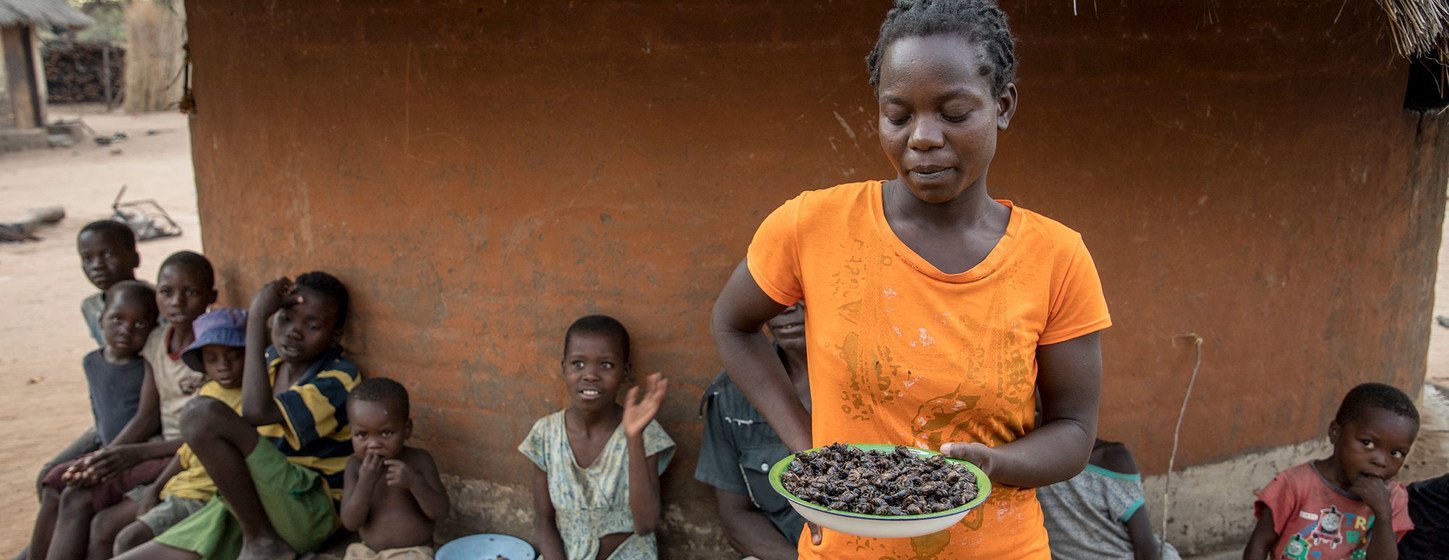
In Mazambara, Zimbabwe, where rain has been very sparse, a woman shows a plate of cicadas, one of the food options available after the WFP food ration is over.
    
16 January 2020
The climate crisis, as well as persistently high inequalities, and rising levels of food insecurity and undernourishment, is affecting the quality of life in many societies and fuelling discontent, the UN warned on Thursday, on the publication of the 2020 World Economic Situation Report (WESP).

Switch to renewables and low-carbon energy urgently needed

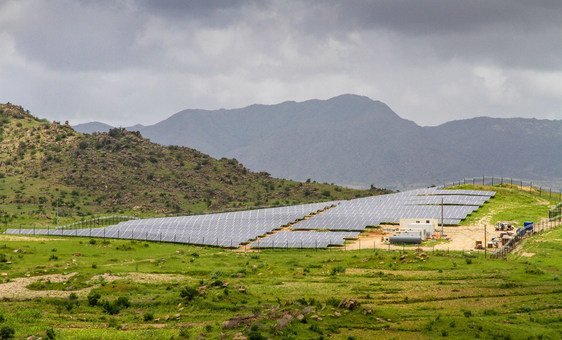
UNDP Eritrea/Elizabeth Mwaniki | A solar mini-grid system in Eritrea powers two rural towns and surrounding villages.
The UN economic experts behind the report are unequivocal in their call for “massive adjustments” to the energy sector, which is currently responsible for around three-quarters of global greenhouse gas emissions.
If the world continues to rely on fossil fuels over the next few years, and emissions in developing countries rise to the level of those in richer nations, global carbon emissions would increase by more than 250 per cent, with potentially catastrophic results.
The report’s authors insist that the world’s energy needs must be met by renewable or low-carbon energy sources, which will lead to environmental and health benefits, such as lower air pollution, and new economic opportunities for many countries.
However, the 2020 WESP finds that the urgent need to switch to clean energy continues to be underestimated, noting that countries are continuing to invest in oil and gas exploration, and coal-fired power generation (read our story on the the move away from coal here).
This reliance on fossil fuels is described as “short-sighted”, leaving investors and governments exposed to sudden losses, as the price of oil and gas fluctuates, as well as contributing to deteriorating climatic conditions, such as global warming.
“Risk associated with the climate crisis are becoming an ever-greater challenge”, concludes the report, and “climate action must be an integral part of any policy mix”.
Strategies and technology for a transition to a clean economy that delivers accessible to reliable and decarbonized energy already exist, continues the report, but will require political will and public support. Failure to act will significantly increase the ultimate costs.

East Asia forges ahead, as Africa stagnates

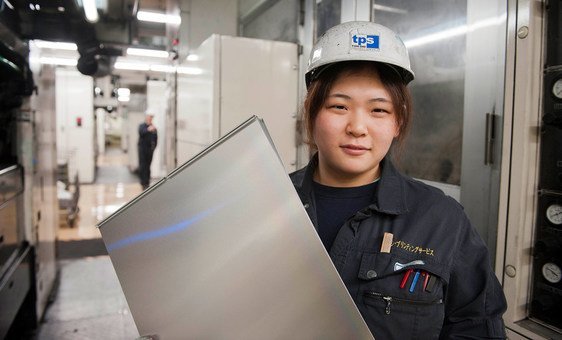
ILO/Marcel Crozet | A female employee at a printing factory in Kyoto, Japan.
The East Asia region continues to be the world’s fastest growing region, with China’s economy growing at a rate of 6.1 per cent in 2019. Although growth is expected to level off, China will still see world-beating growth of 5.9 per cent by 2021.
The more economically developed parts of the world are seeing much slower growth, with the USA expected to see a slowdown from 2.2 per cent in 2019, to 1.7 per cent in 2020. The European Union is only expected to grow by 1.6 per cent, although this is an improvement on 2019, when the bloc only grew by 1.4 per cent. The sluggish growth in both regions is blamed mainly on global uncertainty.
Africa, meanwhile, continues to suffer from near stagnation. In a third of developing countries dependent on commodities, including Angola, Nigeria and South Africa, average real incomes are lower today than they were in 2014 and, in several sub-Saharan African countries, the number of people living in extreme poverty has risen.

Setback for UN development agenda

Although the report assumes that trade tension will ease, the potential for a relapse is high, says the report, as the root causes behind disputes have not yet been tackled.
Continuing weak growth in the global economy will make it harder to achieve the 2030 Agenda for Sustainable Development. The Agenda, the UN’s blueprint for a better future for people and the planet, includes commitments to eradicate poverty and create decent jobs for all.

What is the WESP?

The World Economic Situation and Prospects report is the UN’s flagship publication on expected trends in the global economy.
It is produced annually by the UN Department of Economic and Social Affairs (DESA), the UN Conference on Trade and Development (UNCTAD) and the five UN regional commissions (Africa, Europe, Latin America and the Caribbean, Asia and the Pacific, and Western Asia).
On the launch of the WESP, UN Secretary-General António Guterres warned of the potential impacts of a slowdown: “These risks could inflict severe and long-lasting damage on development prospects. They also threaten to encourage a further rise in inward-looking policies, at a point when global cooperation is paramount”.

Growth alone is not enough

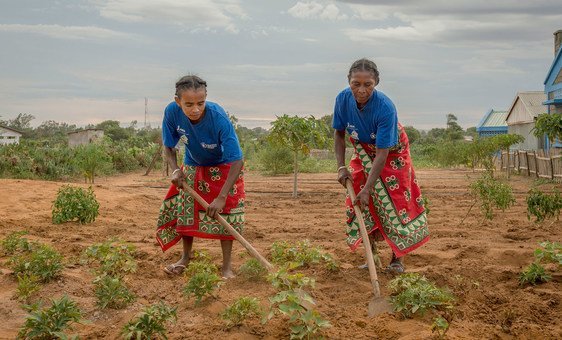
WFP/Giulio D'Adamo | Women in Madagascar cultivate vegetables on land using a micro irrigation system, where WFP is providing income generating opportunities to small-holder farmer organizations. 
The authors of the 2020 WESP conclude that it is not enough to simply focus on economic growth, at any cost, and governments must ensure that growth is inclusive.
“Policymakers should move beyond a narrow focus on merely promoting GDP growth, and instead aim to enhance well-being in all parts of society”, said Elliott Harris, UN Chief Economist and Assistant Secretary-General for Economic Development.  
In order to improve well-being for all, Mr. Harris emphasizes the importance of prioritizing investment in sustainable development to promote education, renewable energy, and resilient infrastructure, and called for governments to pay closer attention to the implications of their policies on the environment, and a fairer distribution of wealth within their countries.


♦ Receive daily updates directly in your inbox - Subscribe here to a topic.
♦ Download the UN News app for your iOS or Android devices.