Monday, 23 September 2019

five billion to miss out on health care

World Bank/Dominic Chavez
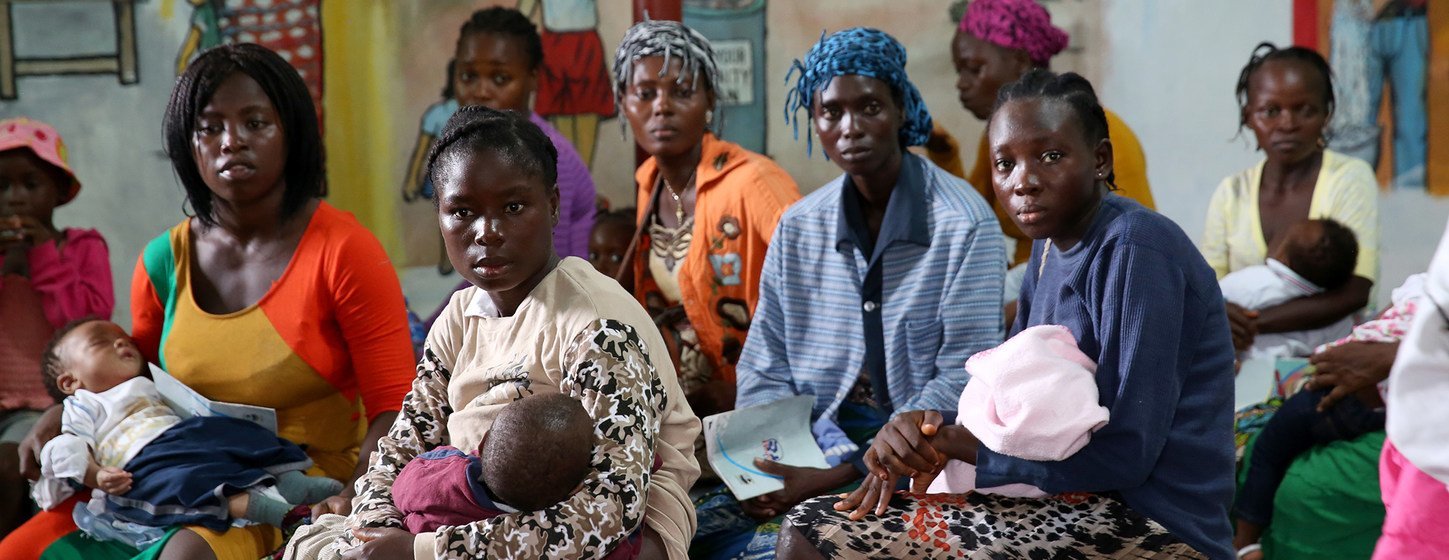
Patients seeking treatment at the Redemption Hospital in Monrovia, Liberia.
    
22 September 2019
Some five billion people risk missing out on health care in 2030, unless countries close glaring gaps in health coverage, a new report revealed on Sunday, as the UN prepares to host a landmark summit to speed up progress on universal health care. 
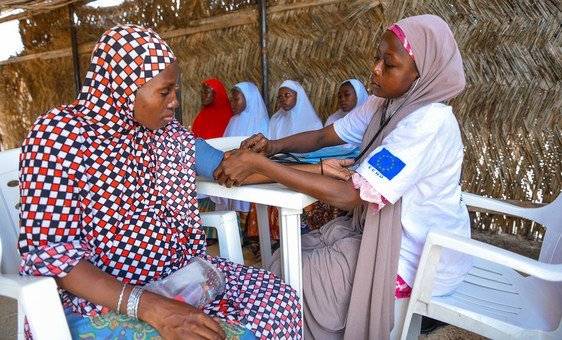
A pregnant woman receives medical care at a mobile health clinic in Nigeria. © 2018 European Union
The study, “Primary Health Care on the Road to Universal Health Coverage”, estimates that around 60 million lives could be saved by upping annual spending on primary health care in low and middle-income countries by some $200 billion per year.
Whilst overall coverage has increased steadily since 2000, the UHC report shows big health service gaps in the poorest countries, and those affected by conflict. Rural areas tend to suffer from lower coverage , due to a lack of infrastructure, shortage of health workers, and poor-quality care .
“If we are really serious about achieving universal health coverage and improving people’s lives, we must get serious about primary health care,” declared, Tedros Adhanom Ghebreyesus, WHO Director-General, at the launch of the report.
“That means providing essential health services like immunization, antenatal care, healthy lifestyle advice as close to home as possible, and making sure people do not have to pay for this care out of their own pockets.”

The report was published ahead of the first-ever high-level summit on universal health coverage (UHC), at UN headquarters in New York, on Monday, one of five official summits taking place during the High-Level Week marking the opening of the new General Assembly session.
The UN is billing the event as the most significant political meeting ever to be held on the topic, with senior representatives from a wide range of relevant organizations – including Heads of State and Government, parliamentarians, senior UN officials, members of civil society, business leaders, and academics – due to attend.

Health and sustainable development

The World Health Organization (WHO), which plays a leading role in supporting countries in the implementation of universal health coverage, believes that health is essential for sustainable development, and has worked with the Kenyan Government on the launch of pilot UHC programmes in a number of Kenyan counties, selected because they have a high prevalence of communicable and non-communicable diseases, high population density, high maternal mortality, and high incidence of road traffic injuries.
The aim of the pilot programmes is to improve health care by abolishing fees at local health care facilities, and introducing a social health insurance scheme. In one of the counties, Makueni, residents have enthusiastically embraced the plan, and the peace of mind that comes with no longer having to worry about treatment costs.

Progress on universal health coverage, like climate action, is seen as one of the key elements in ensuring that the 2030 Agenda, the UN’s blueprint for a future that is good for the planet, people and prosperity: Sustainable Development Goal 3 calls on the international community to “ensure healthy lives and promote well-being for all, at all ages”, and achieving UHC is one of the targets the nations of the world set, when adopting the Goals in 2015.
On Sunday, the WHO and partners organised an event in New York, Walk the Talk, described as “a celebration of health in the form of a walk, run, roll or ramble”, to promote healthy lifestyles and action on climate change. Find out more here.

Universal Health Coverage Summit in brief

  • The UHC conference is one of five official Summits taking place during the High-Level Week
  • the UN is billing the event as the most significant political meeting ever to be held on universal health coverage
  • Heads of State and Government, parliamentarians, senior UN officials, members of civil society, business leaders, and academics are due to attend

 

♦ Receive daily updates directly in your inbox - Subscribe here to a topic.
♦ Download the UN News app for your iOS or Android devices.

NEWS TRACKER: PAST STORIES ON THIS ISSUE

Despite progress in childbirth safety, one woman or baby dies every 11 seconds

Childbirth survival rates are now a “staggering success” compared with the year 2000, but one pregnant woman - or her child - still dies every 11 seconds from largely preventable causes, UN health experts said on Thursday.

UN General Assembly: Here are the 5 big summits to watch out for

It’s that time again, when the eyes of the world turn to New York, as world leaders fly into the city to take part in the General Debate that marks the opening of the latest session of the UN General Assembly, or UNGA.

At UN, youth activists press for bold action on climate emergency, vow to hold leaders accountable at the ballot box

UN Photo/Kim Haughton
Secretary-General António Guterres (centre) and Greta Thunberg (second from right), Youth Climate Activist, at the opening of the UN Youth Climate Summit.
    
21 September 2019
Students and young activists on Saturday threw down the gauntlet to world leaders heading to United Nations Headquarters next week for high-level climate talks, demanding that they “stop wasting time” and work harder to curb carbon emissions, “or we will vote you out.”
“We have been waiting for you!” Jayathma Wickramanayake, the UN Youth Envoy, said, welcoming the boisterous crowd of young climate leaders, who made it clear from the very start of the day-long event that global political leaders are now on notice: they must make radical changes to shift the world away from fossil fuels and towards clean energy, protect our oceans, and promote sustainable consumption.
This first-ever UN Youth Climate Summit follows Friday’s global ‘climate strike’, which saw millions of young people from across the globe walk out of school and jam streets in major cities, from New York to New Delhi and Santiago to San Francisco, waving protest signs with slogans like: “Every disaster movie starts with a scientist being ignored”; and “I’m ditching school because you’re ditching the planet.” 

Finally, a seat at the climate action table

On Saturday, Ms.Wickramanayake said: “Climate change is the defining issue of our time. Millions of young people all over the world are already being affected by it. If we don’t act now, the impact will be severe.”
She praised the cliamte strike movement, saying: “We have seen how you organize your communities … Your peers and even your parents.” And after demanding for years that their voices be heard on climate, she said: “Imagine the power of the movement you have created! The leaders are now asking for a seat at your table!”
The Summit, aiming to be different from the usual speaker-by-speaker UN meeting, took the form of a series of lively discussions and Q & A sessions, led by moderators and young people in sneakers rather than UN representatives.
Even Secretary-General António Guterres served as “keynote listener” to a panel of young people who were not only at the frontlines of the climate emergency, but also coming up with innovative ways to combat the crisis.  The over 600 attendees included 100 ‘green ticket’ winners, outstanding young climate champions chosen from around the world will receive support to participate, 
“Yesterday, millions of people across the globe marched and demanded real climate action, especially young people,” said Greta Thunberg, the 16-year-old Swedish climate activist who helped ignite a global movement. “We showed that we are united. And that we young people are unstoppable,” she encouraged fellow participants, ahead of her address to world leaders on Monday at the Secretary-General’s Climate Action Summit.

'Enouth is enough: No more fossile fuels!'

Giving the front-line perspective, Fijian climate change action advocate Komal Kumar said her homeland was suffering greatly from the impact of a climate crisis it had contributed very little to creating. But people from her generation worldwide were “living in constant fear and climate anxiety … Fearing the future.”
“Things are black and white for us: We are not insurance policies, we are human beings, we are communities. Is it too much to ask you to walk the talk, are we really looking forward to false hope?” she asked.
“We demand action. Stop wasting time. Stop hindering the work [towards a sustainable future] for short term profits. Engage young people in the design of adaptation plans,” said Ms. Kumar, who warned: “We will hold you accountable. And if you do not remember, we will mobilize to vote you out.”
UN Photo/Manuel Elias
Wanjuhi Njoroge, an activist from Kenya, highlighted progress on restoring the country’s forest cover and said that overall, youth-led climate initiatives “will cause a revolution. [And as such], we must be allowed to influence [climate] decisions. Member States must respect our freedom of expression, including online.”
“This is the time for us to work together. I invite all of us to be the hummingbird that puts out the forest fire, as everyone else said it was impossible.”
Thanking the UN for “including the voices of our generation in the process of building paths towards a more habitable planet,” young Argentinian climate activist Bruno Rodriguez declared climate change “the political crisis, cultural crisis of our time. Enough is enough. We don’t want fossil fuels anymore.”
“The science is clear; our world leaders have an obligation to make radical change,” he stressed, adding that young climate changemakers are building a new “collective consciousness.” Turning to the Secretary-General, Mr. Rodrigues said: “Let’s stop asking world leaders to just listen to science and demand they act on science.”
The day’s programme culminated in unveiling the State of Youth Platform and the ActNow platform that encourages people to take action on climate action.  
UN Deputy Secretary-General Amina Mohammed took part in a Town Hall with the participants and high-level representatives from Governments and civil society. 
“Never before in history has the United Nations offered such a prominent and visible platform to young people at a political summit,” said Ms. Mohammed, stressing that: “This is testament to the fact that your generation is leading on climate action and drawing worldwide attention to the climate emergency in a way that was impossible to imagine just a little over a year ago.” 

My generation has a huge responsibility – UN chief Guterres

For his part, Mr. Guterres, leaving his usual formal tie behind and opting for an open collar, agreed that “one of the problems of world leaders [is that] they talk too much, and they listen too little. And … It is in listening that we learn. It is in giving the possibility for all those that represent today's world to speak and to have their voices be part of decision-making processes that we can move forward.”
While he painted a dire picture of the impacts of the climate emergency ­– from droughts in Africa to bleaching coral reefs and heatwaves elsewhere – the Secretary-General said he saw “a change in momentum” ahead of Monday’s Climate Action Summit, due to movements like those spearheaded by Ms. Thunberg, other grassroots activists and initiatives being undertaken “at the village level.” 
“I encourage you to go on … To keep your mobilization, and more and more to hold my generation accountable,” said the UN chief, adding: “My generation has largely failed until now to preserve both justice in the world and to preserve the planet. My generation has a huge responsibility. It is your generation that must make us be accountable to make sure that we don't betray the future of humankind.”
The Climate Action Summit will kick off a series of high-level events at UN Headquarters next week to drive action for people and the planet. These meetings, running alongside the UN General Assembly’s annual general debate, will see world leaders discuss progress on the Sustainable Development Goals (SDGs), universal healthcare for all, and securing a broad-based development partnership for small island developing States.

UN chief urges restraint following reported Saudi-led assault in Yemen

OCHA/Giles Clark
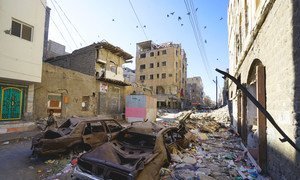
Cratar neighbourhood in Aden, Yemen. (18 November 2018)
    
21 September 2019
Amid reports of a Saudi-led coalition airstrike near Yemen’s port city of Hudaydah, Secretary-General António Guterres expressed concerns for the attacks in a Saturday statement attributable to his Spokesperson, Stephane Dujjaric.
An early morning strike on 20 September in the vicinity of the Al Hali District of Hudaydah governorate-in the country’s western coast- was carried out by a Saudi military operation, according to media reports. 
The assault comes after Yemen-based Houthi rebel forces launched two drone attacks on  major Saudi oil facilities on 14 September, a violation of UN ceasefire agreements reached at peace talks in Sweden last year. 
“The Secretary-General continues to urge all parties to exercise maximum restraint and ensure adherence to the terms of the  Hudaydah Agreement of 13 December 2018,” the Spokesperson said. 
“He recalls that the parties reconfirmed their commitment to the ceasefire established by the Agreement during the latest joint meeting of the Redeployment Coordination Committee earlier this month,” he added, in which members agreed to deploy monitoring teams on Hudaydah frontlines as a step aimed at sustaining the truce.
Special Envoy for Yemen, Martin Grifiths warned on Monday that the initial Houthi-led attacks could be sounding the alarm that the war-torn country could be dragged further into conflict.
The four-year clashes between Houthi rebels and the internationally-recognized Government, supported by a Saudi-led coalition has pushed the country to the brink of famine.
The UN humanitarian affairs coordination office, OCHA, estimates roughly 80 per cent of the population—or 24 million people—require humanitarian aid.


♦ Receive daily updates directly in your inbox - Subscribe here to a topic.
♦ Download the UN News app for your iOS or Android devices.

NEWS TRACKER: PAST STORIES ON THIS ISSUE

Attack on Saudi facilities risks dragging Yemen into ‘regional conflagration’: UN Envoy

Attacks against oil facilities in Saudi Arabia over the weekend, claimed by rebel fighters in Yemen, are a sign that the war-torn country could be drawn into even greater conflict, the top United Nations official there told the Security Council on Monday.

Guterres calls for ‘maximum restraint’ following drone assault on key Saudi oil facility

The UN Secretary-General appealed on Sunday for “maximum restraint" following a wave of drone attacks claimed by Houthi rebels in Yemen, against two Saudi Arabian-based petroleum processing facilities, which threaten to disrupt global oil supplies.