Wednesday, 29 January 2020

DARFUR WAR COULD LEAD TO FRESH INFLUX OF REFUGEES IN CHAD

West Darfur tensions could see 30,000 flee across Sudanese border to Chad: UN refugee agency
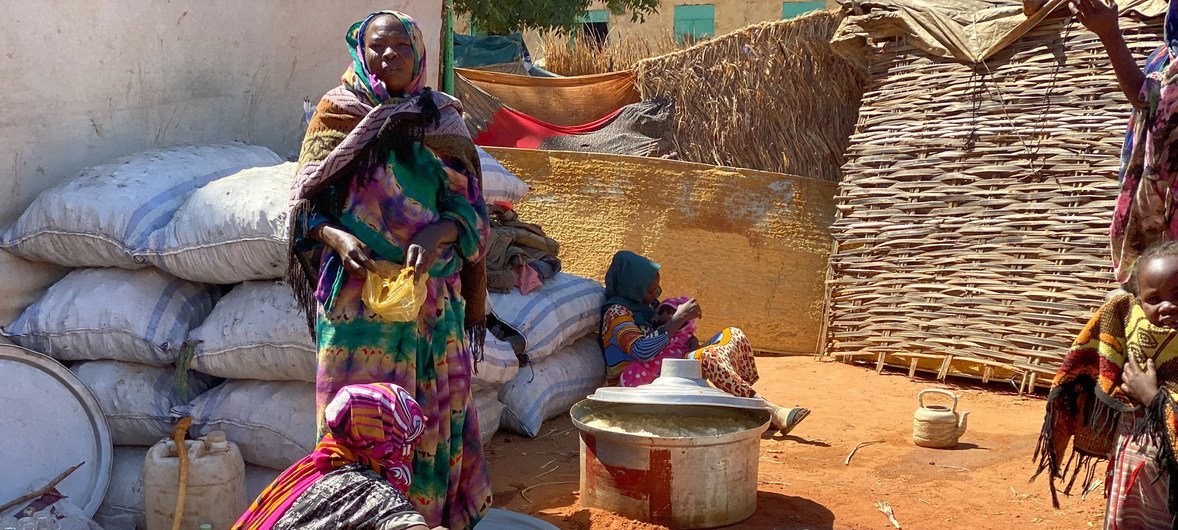
©UNHCR/Modesta Ndubi
Internally displaced families gather at a temporary gathering point outside a school in El Geneina town following recent intercommunal conflict in West Darfur.
28 January 2020
The number of people fleeing to Chad to escape ongoing tensions in Sudan’s West Darfur state, could reach 30,000 in the coming weeks, the UN refugee agency, UNHCR, said on Tuesday.
So far, 11,000 people have crossed the border since deadly inter-communal clashes erupted in the state capital, El Geneina, in late December, with some 4,000 fleeing in the past week alone.
The violence has also uprooted another 46,000 people within Sudan, most of whom were already displaced. 
“With El Geneina only 20 kilometers from the border, thousands of refugees crossed into Chad, a number UNHCR anticipates could reach 30,000 in the coming weeks as tensions persist. UNHCR teams on the ground are hearing accounts of people fleeing after their villages, houses and properties were attacked, many burnt to the ground”, agency spokesperson Babar Baloch told journalists in Geneva.
The arrivals are scattered in several border villages in Chad, around the town of Adré, which already is hosting some 128,000 Sudanese refugees.
Mr. Baloch described their conditions as dire: “Most are staying in the open or under makeshift shelters, with little protection from the elements. Food and water are urgently needed, while health conditions are a concern.”
UNHCR and its partners are on the ground, registering refugees and providing them with food, water and other lifesaving aid.  Humanitarian workers are also assisting those refugees who require special care, such as unaccompanied children.
However, Mr. Baloch reported that the rate of arrivals “risks outpacing our capacity”, and that more resources and support are needed.  UNHCR is working with the Chadian Government to identify a new relocation site further from the border, he added.
Back in West Darfur, humanitarians continue to assist displaced people gathered at over three dozen locations.
UNHCR trucks have been rushing in relief items from its warehouses in other states in the Darfur region, with more aid expected.


♦ Receive daily updates directly in your inbox - Subscribe here to a topic.
♦ Download the UN News app for your iOS or Android devices.

News Tracker: Past Stories on This Issue

Sudan: Lives of traumatized, displaced women in West Darfur under threat

Ongoing instability in Sudan’s West Darfur region has left the lives, health and safety of thousands of women hanging in the balance, according to the  United Nations Population Fund, UNFPA.

Sudan: Intercommunal clashes displace tens of thousands in volatile Darfur region

Around 40,000 have been displaced in Sudan’s West Darfur state in recent days, following intercommunal clashes, the UN Office for the Coordination of Humanitarian Affairs (OCHA) said on Tuesday, citing Sudanese Government data.

NEW UNITED NATIONS FINANCE PANEL TO PUSH GOALS FORWARD

New UN finance panel to push Global Goals forward

WFP/Simon Pierre Diouf
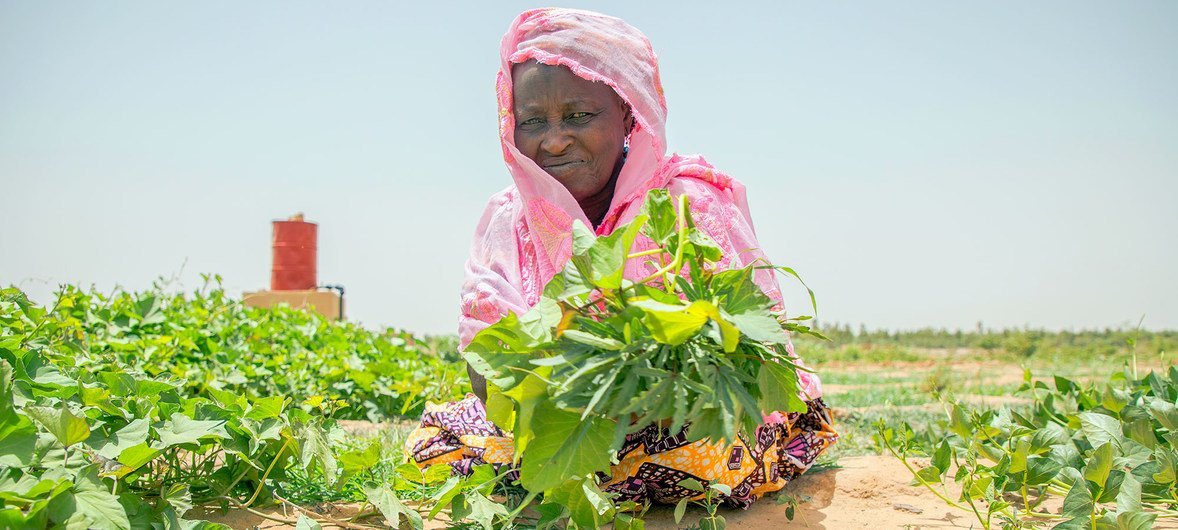
A woman in Mali takes care of a community garden which is part of the World Food Programme's capacity building project.
28 January 2020
The President of the UN General Assembly on Tuesday encouraged Member States to support a new panel that has been set up to help make the Sustainable Development Goals (SDGs) a reality, by 2030. 
On Tuesday, Tijjani Muhammad-Bande and Mona Juul, the President of the UN Economic and Social Council, ECOSOC, introduced a joint initiative to establish a high-level panel on financial accountability, transparency and integrity, called FACTI.
“It is critical that Member States get behind the panel's work, both substantively and financially”, he urged, noting that in light of the Decade of Action, it would help promote faster progress towards achieving the 2030 Agenda on Sustainable Development.
He said the flow of illicit cash and goods on the international black market, impacts every nation’s ability to mobilize domestic resources.
Moreover, it is a cross-border problem that requires “inclusive multilateral action”.
ECOSOC chief Ms. Juul said that this year was “a significant milestone in our journey” to implement the 2030 Agenda and strengthen multilateralism and appealed to everyone to “make the world a better place for us and for those coming after us”.

Panel timeline

She noted that both the major UN bodies are working together within the framework of the 2030 Agenda to end poverty, reduce inequality, protect the planet and ensure peace and justice for all. 
“Financing for development (FFD) is a priority for my ECOSOC presidency”, she stated, stressing the need to show “real progress” in eliminating the flow of illicit finance. 
Ms. Juul set out a timeline, saying the panel would be launched in early March and its members to meet “face-to-face at least four times, in different regions of the world”.
“It is a tight schedule, but we are aware of the urgency to address these issues”, she stated.
The panel will produce an interim report in July 2020, and its final report with recommendations in January 2021.

Encouraging collaboration

Meanwhile, Deputy Secretary-General Amina Mohammed highlighted three areas where she felt collaboration between the Assembly and ECOSOC “can make a strong contribution”.
In this regard, she cited the importance of cooperation across the UN System, the High-Level Political Forum and the centrality of the ECOSOC-General Assembly partnership.
She concluded by encouraging the joint efforts “We look forward to working closely with you all as we make 2020 a year of urgency, and the 2020s a decade of action to deliver the SDGs”.


♦ Receive daily updates directly in your inbox - Subscribe here to a topic.
♦ Download the UN News app for your iOS or Android devices.

News Tracker: Past Stories on This Issue

Rising inequality affecting more than two-thirds of the globe, but it’s not inevitable: new UN report

Inequality is growing for more than 70 per cent of the global population, exacerbating the risks of divisions and hampering economic and social development. But the rise is far from inevitable and can be tackled at a national and international level, says a flagship study released by the UN on Tuesday.

Accelerating towards a fairer future

Cutting child mortality by a third in Brazil, reaching carbon neutrality in Finland and redirecting trillions of dollars of investment to funds that promote sustainability: these are some examples of initiatives from governments, civil society and the private sector, designed to speed up the UN’s goal of achieving a fairer society for all.

POSSIBLE HUMAN RIGHTS VIOLATIONS IN ISIL FIGHTER TRIALS


Iraq: UN human rights report voices concern over conduct of ISIL fighter trials

UNAMI PIO/Sarmad As-Safy
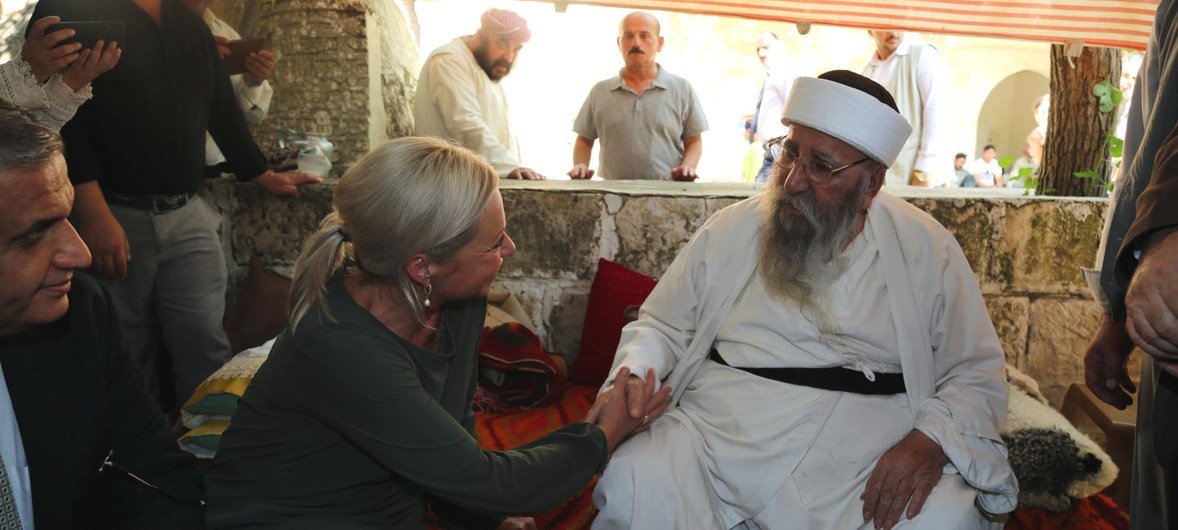
UN Special Representative Hennis-Plasschaert visits Sinjar on the fifth anniversary of the gross atrocities committed by ISIL terrorists against Iraq’s Yazidi community. (August 2019)
28 January 2020
A new UN report published on Tuesday shows that while considerable effort has been made by Iraqi authorities to bring former ISIL terrorist fighters to justice, there are “serious concerns” about the fairness of the proceedings.
The joint report by the UN Assistance Mission for Iraq (UNAMI) and the UN human rights office found that basic fair trial standards were not respected in terrorism-related trials, thus placing defendants at a serious disadvantage.
“A fair and just criminal justice system is a central element to the democratic way of life, and key to building trust and legitimacy, and promoting and protecting human rights”, said UN High Commissioner for Human Rights, Michelle Bachelet. 
“Those responsible for widespread atrocities against the Iraqi population must be held to account for their crimes, and it is important that the victims see that justice is delivered. At the same time, those accused have the right to a fair trial, and these standards must be strictly applied.”

Nearly 800 trials monitored 

The terrorist group ISIL, most commonly referred to in Arabic as Daesh, waged a campaign of widespread violence against the Iraqi population between June 2014 and December 2017, holding large swathes of territory across the country, as well as northern Syria, until its military defeat.
Fighters committed atrocities, including mass murder, abductions, sexual slavery and destruction, which may amount to war crimes, crimes against humanity, and possibly genocide.
The report is based on independent monitoring of 794 criminal court trials mainly involving ISIL defendants held in eight Iraqi provinces from 1 May 2018 through 31 October 2019. The majority of the hearings, 619, concerned people facing anti-terrorism charges.

Overreliance on confessions 

While proceedings were generally orderly and well organized, with judges who were routinely prepared with investigation files, UN human rights officers found defendants had ineffective legal representation and limited possibilities to present or challenge evidence.
Prosecutions mainly focused on “association” or “membership” of a terrorist organization, with no distinction being made between people who participated in violence and those who joined ISIL for their own survival, or through coercion.
For example, UNAMI observed a trial in Erbil where the wife of an ISIL fighter was sentenced to three years’ imprisonment based on an informer’s evidence that she used to cook meals for her husband and other fighters.  
In another case, a 14-year-old boy in Baghdad was condemned to 15 years in jail based on the admission that his family was among civilians forced to act as “human shields” to protect ISIL fighters from aerial attack.
Furthermore, the report stated “the over-reliance on confessions, with frequent allegations of torture that were inadequately addressed—while constituting a human rights violation in itself—further added to the concerns”.

Strengthen criminal justice proceedings 

Through its mission, UNAMI, the UN supports Iraq in promoting accountability, protection of human rights, and judicial and legal reform.
The joint report praises the efforts made by the authorities to seek justice and accountability for the crimes committed by ISIL, with more than 20,000 terrorism-related cases processed between January 2018 and October 2019, and thousands pending.
However, the authors call for a thorough review of trial and sentencing practices, aimed at strengthening criminal justice procedures.

Report recommendations 

Recommendations include revising the anti-terrorism laws to comply with international law, and ensuring defendants have sufficient time to prepare and present their cases.
“Robust safeguards for detention, due process and fair trials not only demonstrate commitment to justice: they are a necessary building block for resilience. We are well aware that a variety of grievances, including unfair trials and detainee abuse, have been exploited in the past by ISIL to fuel its violent agenda,” said UNAMI chief, Jeanine Hennis-Plasschaert.


♦ Receive daily updates directly in your inbox - Subscribe here to a topic.
♦ Download the UN News app for your iOS or Android devices.

News Tracker: Past Stories on This Issue

Courage of terrorism survivors underlines ‘urgency’ of UN Investigative Team’s work in Iraq

The leader of the special UN Investigation Team probing crimes committed by ISIL terrorists in Iraq, said on Tuesday that the courage being demonstrated by survivors coming forward “serves to underline the urgency” they need to carry on with their work.

PROGRESS MADE BY THE UNITED NATIONS IN THE LAST ONE WEEK GLOBALLY

FROM THE FIELD: Sourcing clean water in Ghana

UNDP Ghana
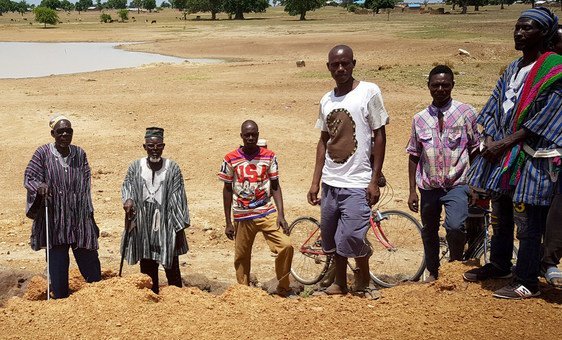
In northern Ghana some 50% of people lack access to safe drinking water.
28 January 2020
Communities in northern Ghana are benefiting from the rehabilitation of water sources which is expected to boost livelihoods and build resilience against climate change, thanks to a project supported by the UN Development Programme (UNDP).
UNDP Ghana | Communities in northern Ghana are benefiting from improvements made to water sources. 
Around 50 per cent of the population in the north of the West African country does not have access to clean drinking water, leaving them vulnerable to illness and disease.
But now the rehabilitation and construction of new boreholes and dams as well as irrigation systems in 50 communities is helping meet domestic water needs and provide innovative opportunities for growing crops in a region affected by climate change.
One group of farmers has discovered a new crop which is boosting incomes.
Read more here about how fresh water is bringing fresh hope to some of the most vulnerable people in Ghana.


♦ Receive daily updates directly in your inbox - Subscribe here to a topic.
♦ Download the UN News app for your iOS or Android devices.

News Tracker: Past Stories on This Issue

FROM THE FIELD: Restoring life to Ghana’s land

Subsistence farmers in Ghana are learning how to hold back the decline in the fertility of the smallholdings they cultivate while revitalizing their soils as desertification increasingly threatens their land and livelihoods.

Promoting gender equality a ‘crucial contribution’ in effort to restore, protect our planet’s oceans

Women are engaged in all aspects of interaction with our ocean, yet their voices are often missing at the decision-making level, the head of the United Nations cultural agency said on World Oceans Day, emphasizing that “we must ensure diversity and gender inclusiveness at all levels” to set a balanced course for humanity and foster innovative solutions for the ocean.

GREAT ILL ON-GOING INSIDE CENTRAL SAHELIAN REGION OF AFRICA

Nearly 5 million children in need due to rising violence in central Sahel: UNICEF

UN OCHA/Giles Clarke
Boys play in a waterhole near the town of Kaya in northern Burkina Faso.
28 January 2020
A surge in violence in the central Sahel region in Africa means nearly five million children will need humanitarian assistance this year, up from 4.3 million, the UN Children’s Fund (UNICEF) warned on Tuesday.
The agency reported that children have been attacked, abducted or recruited into armed groups due to the spike in armed conflict and insecurity in Burkina Faso, Mali and Niger.
Since the start of the year alone, more than 670,000 children across the region have been forced to flee their homes.
“When we look at the situation in the Central Sahel, we cannot help but be struck by the scale of violence children are facing. They are being killed, mutilated and sexually abused, and hundreds of thousands of them have had traumatic experiences”, said Marie-Pierre Poirier, UNICEF Regional Director for West and Central Africa.
Attacks against children have risen over the past year, according to agency figures.
In Mali, 571 grave violations against children were recorded during the first three quarters of 2019, compared to 544 in 2018 and 386 in 2017.
UNICEF said violence has had a devastating impact on learning, with more than 3,300 schools in the three countries closed or non-operational by the end of 2019.  Overall, 650,000 children and 16,000 teachers have been affected.
Children and their families also face barriers in accessing essential services and food, which can put young lives at risk. As a result, more than 709,000 children under the age of five will suffer from severe acute malnutrition and require lifesaving treatment this year.
At the same time, access to safe water is dwindling, with some areas in Burkina Faso experiencing a decrease of up to 40 per cent.
In addition to calling for an end to attacks on children, UNICEF is asking for safe access to all those affected by the situation. 
The UN agency has appealed for $208 million to support operations on the ground, where it is working with partners in the areas of protection, education, health, nutrition, and water and sanitation.


♦ Receive daily updates directly in your inbox - Subscribe here to a topic.
♦ Download the UN News app for your iOS or Android devices.

News Tracker: Past Stories on This Issue

‘Unprecedented terrorist violence’ in West Africa, Sahel region

The top UN official in West Africa and the Sahel updated the Security Council on Wednesday, describing an “unprecedented" rise in terrorist violence across the region.

HOLOCAUST VICTIMS SHARE PAINS OF HATE

‘Carry our stories forward’: Holocaust survivors share powerful testimonies at UN

UN Photo/Manuel Elias
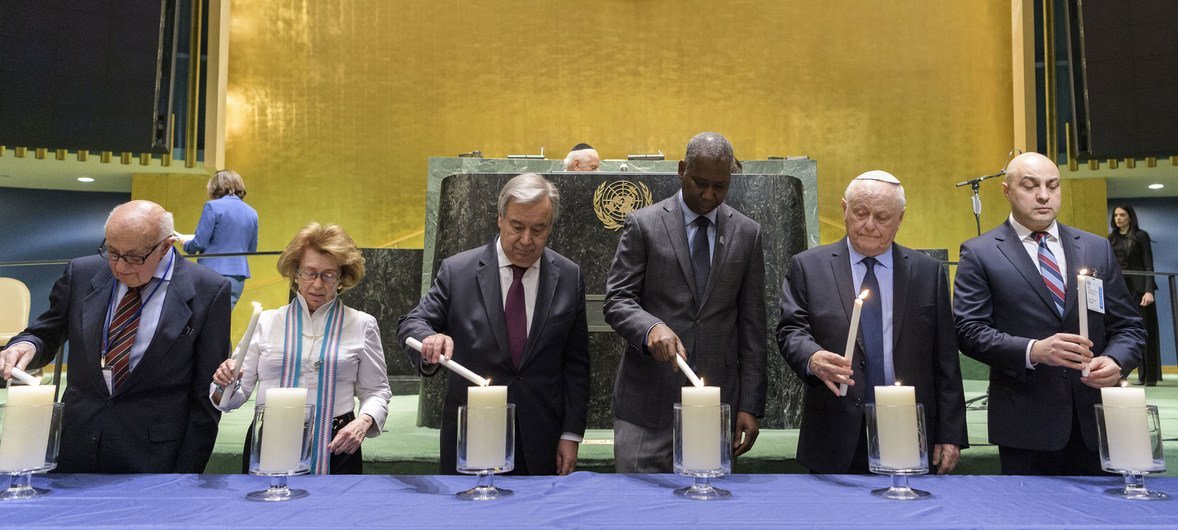
A candle lighting ceremony takes place at the United Nations Holocaust Memorial Ceremony
27 January 2020
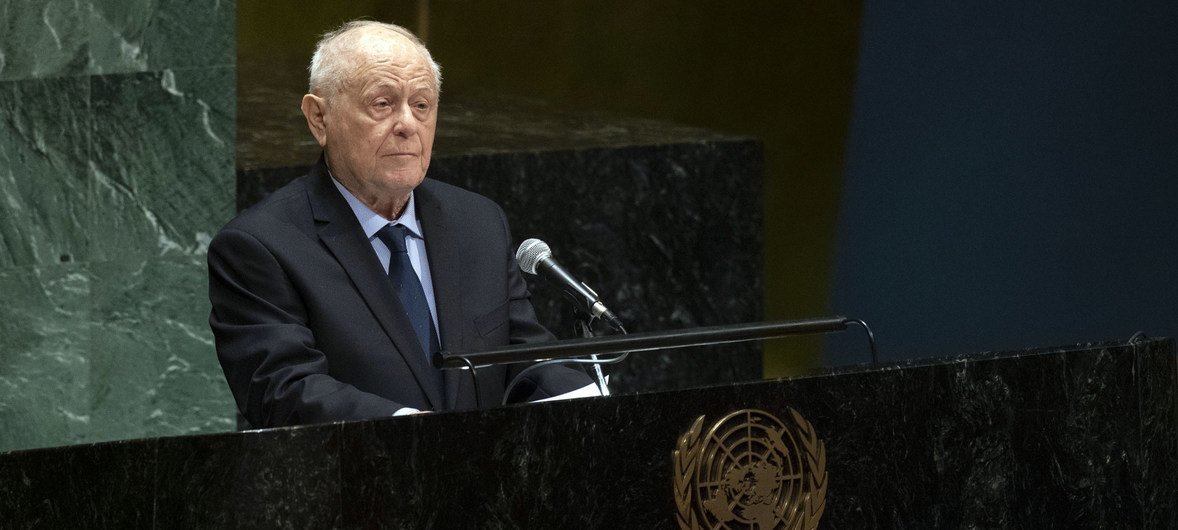
When the Nazis invaded Poland, overnight, nine-year-old Theodor Meron became “a refugee, out of school, out of childhood and constantly in clear and present danger”, the man who would later become a Judge for International Criminal Tribunals told the United Nations Holocaust Remembrance Ceremony on Monday.
While Judge Meron noted that the events of the Holocaust may seem far away for many, separated by “decades of progress”, he stressed that “for those of us who lived through them, as I did as a boy in occupied Poland, they are all too real”.
“What followed was the ghettos, work camps and most of my family falling victim to the Holocaust,” he said.
The keynote speaker at the UN’s ceremony in New York, pointed out that while one-third of the Jewish people were murdered in the Holocaust, “it is often forgotten how millions of Russians and Poles also fell victim to the Nazi killing machine”.
Today, he said, we remember those whom we lost so many years ago, but we also “honour those who took invaluable steps to prevent even greater losses.”
Even while describing “those apocalyptic times”, Judge Meron spoke eloquently of the many who risked their lives to protect Jews, and he paid tribute to “those who were saved, and those who took courageous action to save their neighbours from certain death”.
“That we pause to reflect upon the Holocaust and remember those lost is vitally important,” he said. “That we learn from all that has taken place is imperative, and it is all the more vital that we take every opportunity…to learn from the general that survived, from those who lived through the chaos and calamities of those years”.
Too many were lost, “and soon we too will be gone”, he continued, “leaving those of you gathered here to carry our stories forward in the future, [especially] that most essential lesson: Never again”.

Hitler did not win

“I stand today in front of you to tell you, Hitler did not win”, Holocaust survivor Irene Shashar told those assembled. “I remember.”
Ms. Shashar was born in Poland in 1937 and was not quite two-years old when the Nazis invaded. By the time she turned two, she would be starving in the Warsaw Ghetto.
As she and her family were forcibly moved into the ghetto, Ms. Shashar noted that “the seeds of genocide had been planted” and “survival was the only thing that mattered”.
While she’d hoped “someone would say it was all a big mistake”, of course, that was not the case. “The move to the ghetto was only the beginning of our suffering.”
Ms. Shashar recalled one afternoon as she and her mother were out searching for food in the streets, they’d heard “bloodcurdling screams”.
UN Photo/Manuel Elias
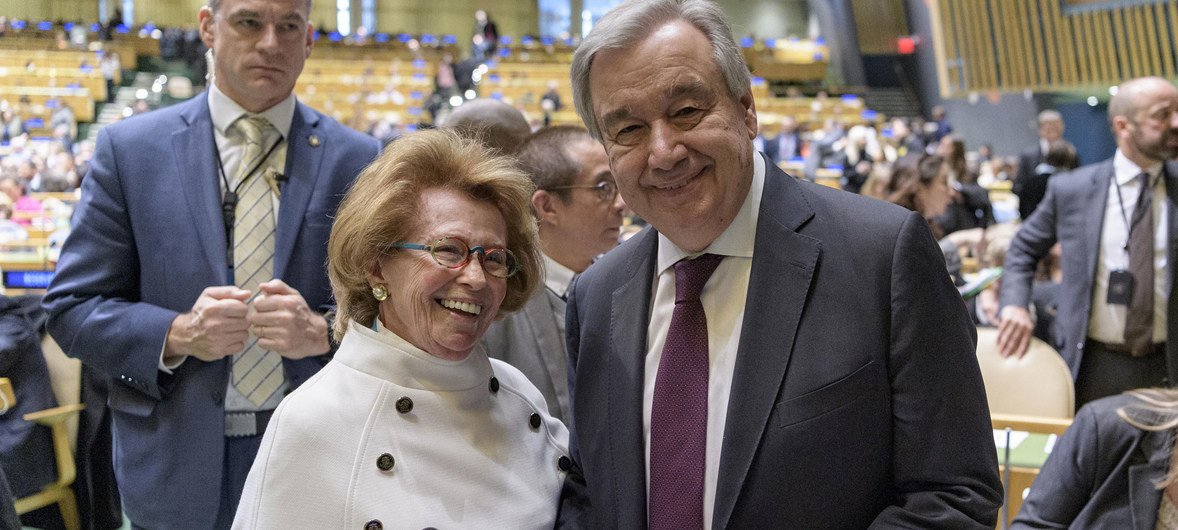
Secretary-General António Guterres (right) greets Irene Shashar, Holocaust survivor, at the United Nations Holocaust Memorial Ceremony
“Mother yanked my little arm and took off in the direction of our cramped living quarters we knew of as ‘home’”, she said.
They’d dashed up the stairway, to their open door where, “lying in the kitchen was my father… limp, bleeding from a gash on the side of his throat”.
“My mother threw herself on top of him. She let out a wail that could have be heard on the other side of the planet”, she continued, “that was the last time I ever saw my father”. 
One day as they hunted for scraps of food, she was “tossed down a sewer”.
“It was wet, dirty...we were crossing the sewer for the whole ghetto area,” she recalled.  “All these years later, I can still smell the stench of that seemingly endless passage [as] rats skittered past me”.
This was how they escaped to the so-called Aryan side of Warsaw.

A hidden child

For the remainder of the war, Ms. Shashar remained hidden.
Her mother would say, “If you don’t cry and are a good girl, this will be over soon”, she remembered.
Both survived the Holocaust, but her mother died in 1948, leaving her a 10-year-old orphan in the care of a family in Peru. There she was able to start a new life.
Ms. Shashar credited her mother’s “overwhelming sacrifice, a priceless, selfless act of courage”, that gave her the chance to survive and to thrive in adulthood.
“Thanks to her, I was blessed with the opportunity to have children and grandchildren,” she said. “Because I sowed my family tree, Hitler did not win. I did the very thing he tried so hard to prevent”.
“I was victorious over Hitler”, Ms. Shashar concluded with a plea that the UN, which rose from the ashes of WWII, raise its voice, “because silence is indifference”.

Living in ‘constant fear’

Shraga Milstein was only six years old when the war broke out.
“The switch from a free and comfortable life to being closed up in a room at the age of six with the constant fear of what the next hour will bring” was Mr. Milstein earliest memory of the Holocaust.
He recalled that in the ghetto his parents tried to prevent him from seeing blood or dead bodies in the street, “which were a common sight”.
Mr. Milstein told how one day everyone was assembled in an open square to walk past a ranking SS Officer, who divided them into two groups.
One group was told to walk under guard to the railway station and the other to return home.
“I still do not understand why and how my father, mother, brother and I were not separated and ordered to return home”, he stated, adding that other family members “were not so lucky”.
UN Photo/Evan Schneider
Holocaust survivor Shraga Milstein was only six years old when World War II broke out. (27 January 2020)
Those that remained in the ghetto were sent to labour camps. At age 11, he worked eight to ten hours a day as an apprentice wood cutter.
And in 1944, was shipped by cattle car with his father and brother to Buchenwald while his mother was sent to Ravensbrück, “it was the last time I saw her”, Mr. Milstein lamented.
Upon their arrival, Mr. Milstein’s father hugged them to say goodbye and reminded the boys that they had family in Palestine. His father was killed the next day at the age of 43.
Several weeks later, Mr. Milstein was transferred with others to Bergen-Belsen concentration camp, where “there were no executions, but people died there from severe hunger” and cold, he explained.
From 1943 until liberation, some 140,000 men, women and children were imprisoned in Bergen-Belsen where about 50,000 died after “prolonged suffering,” he said.

‘Site of hell’

He painted a disturbing picture of the state of the camp when the soldiers arrived to liberate the prisoners, calling it a “site of hell [with] piles of corpses” scattered everywhere and in the barracks, “living people were lying next to dead corpses” without hygiene or water.
The camp was liberated by British soldiers on 15 April 1945 and took them from the squalor of the concentration camp” to proper housing with a clean bed in a military facility.
That day “my world changed from complete neglect and apathy to human compassion and a true effort to help the scared, hungry and sick”, he said.
“The Bergen-Belsen camp was burned and in it, are today mass graves,” a memorial site and museum that keeps “the memory of the atrocities alive” and presents visitors “a world of human understanding, tolerance, freedom and democracy based on the equality of every human being”.  
“It is our duty to condemn and prevent any intolerance against people based on ethnic origin or religion”, he concluded.
UN Photo/Manuel Elias
United Nations Holocaust Memorial Ceremony: “75 years after Auschwitz - Holocaust Education and Remembrance for Global Justice”. (27 January 2020)


♦ Receive daily updates directly in your inbox - Subscribe here to a topic.
♦ Download the UN News app for your iOS or Android devices.

News Tracker: Past Stories on This Issue

Societies must unite against ‘global crisis of antisemitic hatred’, Guterres urges

Commemorating the 75th anniversary of the liberation of the Auschwitz-Birkenau death camp, and the six million Jews and others murdered on Nazi orders during the Holocaust, UN Secretary-General António Guterres told a ceremony in New York on Monday that the world must “re-commit to preventing any repetition of those crimes”.

Combatting antisemitism requires ‘solidarity in the face of hatred’, says UN chief  

Against the backdrop of a constant stream of attacks targeting Jews, their institutions and property, UN Secretary-General António Guterres warned on Saturday of a global crisis of antisemitic hatred.